United Arab Emirates — Gulf coast
Dubai
A coastal emirate where most residents came from somewhere else, laid out in a long strip between the desert and the Gulf. Almost everything about daily life here follows from two facts: the summer heat, and the fact that residency is normally attached to a sponsor.
The geography, and why it matters
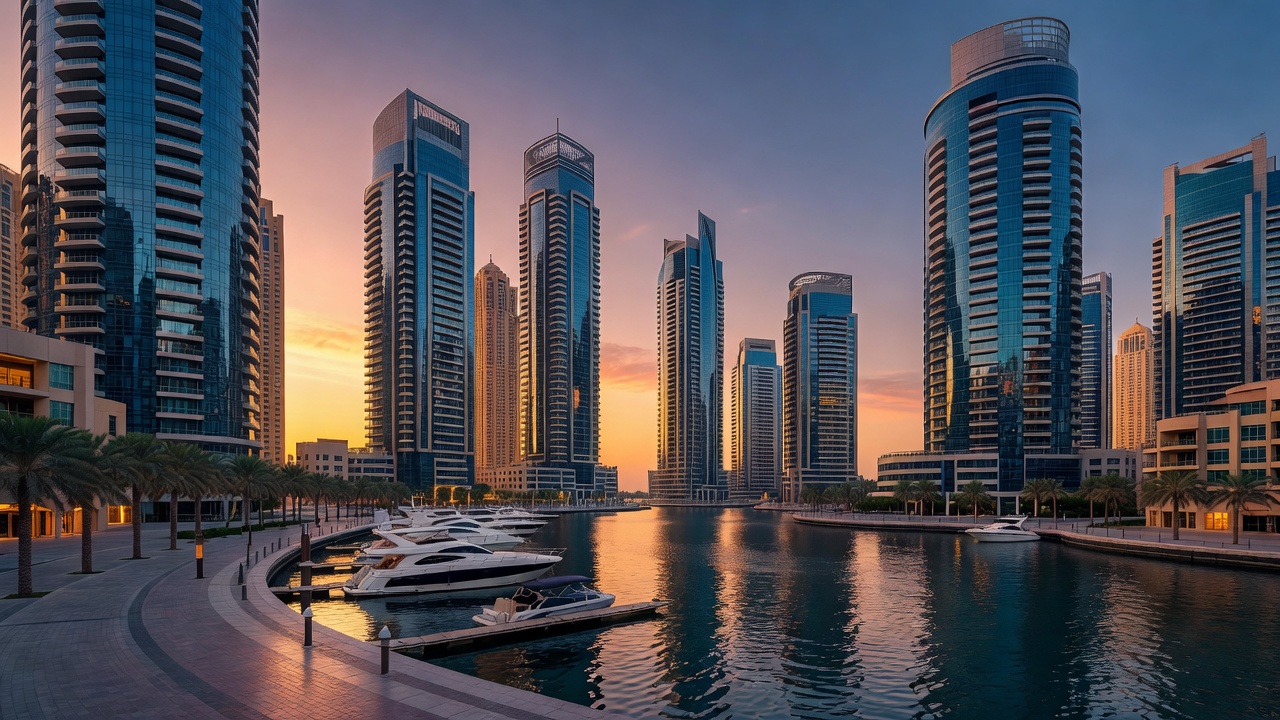
Dubai grew outward from Dubai Creek, the tidal inlet around which the old trading city of Deira and Bur Dubai developed. Everything since has extended south-west along the coast: the historic Jumeirah stretch of low-rise villas, then the towers of Sheikh Zayed Road and the downtown area, then the marina and the newer waterfront developments, with business parks, industrial districts and residential communities filling in inland.
That linear form has a direct effect on life. The city is long, distances between districts are substantial, and the main highway is the spine that everything hangs off. Choosing a neighbourhood here is mostly a decision about commute, because moving from one end of the strip to the other in the morning is not a casual undertaking.
Housing and districts
The housing market splits between apartments in the tower clusters and villas or townhouses in planned communities further inland. Apartment life around the marina, the downtown area and the waterfront districts is dense, walkable within the cluster, and well served by cafés and gyms. Villa communities are quieter, more family-oriented, and organised around schools, parks and shopping centres — but they assume a car.
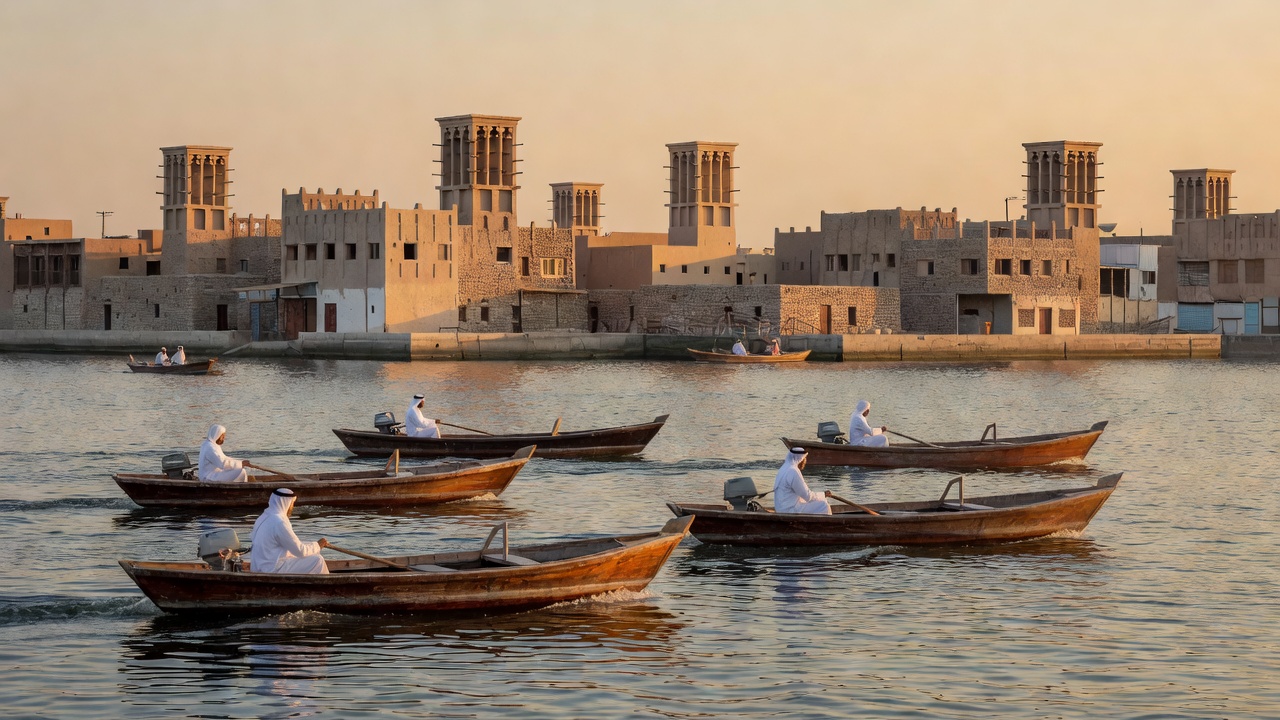
The older districts around the creek are a different city again: souks, low-rise blocks, dense street life and a much broader cross-section of residents. They are often overlooked by arrivals who never leave the newer areas, which is a shame, because that is where the emirate's trading history is legible.
Property ownership rules distinguish between freehold areas and other zones, and rental practice has its own conventions around deposits, agency involvement and how payments are scheduled across the year. These are the details worth checking carefully in your specific case, since they differ by community and by contract.
Residency, work and money
For most people, residency in the UAE flows from sponsorship — usually by an employer, sometimes through a company you set up in a free zone or on the mainland, and in some circumstances through other routes the government publishes. In practice this means the job or the business almost always comes before the move, and it also means your status and your employment are linked in ways that are worth understanding fully before you sign anything.
Health insurance is a requirement for residents, and cover is commonly arranged through an employer. Banking, tenancy contracts and utility accounts all key off your residency documentation, so the sequence of the first few weeks is fairly rigid. The federal government portal at u.ae is the place to start for current requirements, and employment contracts are worth reviewing with a qualified adviser rather than a forum.
Getting around
The metro runs along the main corridor and is fast, clean and well used, with trams and buses feeding it in places. Beyond that corridor, though, the city is built for driving: many residential communities are laid out on the assumption that you have a car, taxis and ride-hailing are the common alternative, and walking between districts is rarely practical even where it looks close on a map.
Heat compresses outdoor life for a large part of the year. From late spring to early autumn, daytime activity moves indoors; from autumn to spring, the city lives outside — beaches, terraces, desert trips, sport. Anyone assessing the place on a winter visit should mentally simulate August before deciding.
The trade-offs
- Summer. The single biggest adjustment. Air conditioning is constant, and outdoor plans shift by season more than in almost any other city in this set.
- Status tied to employment. Residency linked to a sponsor changes how job changes and career breaks work. Understand the terms before you need them.
- Car dependence. Outside the metro corridor, a car is close to essential, with all the cost and time that implies.
- Transience. A highly mobile population means friendship circles turn over. Some find that energising; others find it tiring after a few years.
- Different legal and social norms. Laws and customs differ from those of many arrivals' home countries. Read the official guidance rather than assuming, and behave accordingly.
Who Dubai tends to suit
People moving for a specific role or business opportunity, who want a hub with strong flight connections between Europe, Africa and Asia, and who are comfortable organising life around climate and car. Families often value the range of international schools and the outdoor months. It suits less well people who want a walkable, seasonal European city, who prize deep-rooted local social networks, or who need residency independent of an employer.